Our Class Coordinator has lined up a wonderful selection of classes for you to choose from!
Two class periods are included in the cost of registration. A class period is one Friday afternoon, one Saturday morning, and one Saturday afternoon. If a class offered covers two periods, for example a Saturday morning and Saturday afternoon, that would be the allowed two class selections you can choose and cannot be separated. At registration, please note they are listed as Part 1 and Part 2; if you sign up for part 1, please sign up for part 2 and not another class, except for a wait list class that doesn’t conflict with the 2 period class.
The Registration Process is based on first come, first served. Once Registration opens, the submission spreadsheet is downloaded continually and kept IN THE ORDER OF SUBMISSION even with a timestamp of when received. We cannot control outside circumstances of the internet. Registrants are then put into their selected classes IN THE ORDER OF SUBMISSION. This year you will have the opportunity to select an alternate class choice for each period if any of your class selections are full at the time of your registration. The class coordinator will contact you with your final registered classes and the instructor will contact you about two weeks prior to the event.
BUT WAIT…..you can sign up for a third WAIT LIST CLASS! So if you have signed up for 2 class periods and want to take a third, you can sign up for one on a wait list. If the class you selected as your third option does not fill up to the max class number the instructor has indicated, you may be in that class. The instructor will be notified and you will hear from the instructor like any other class. You may not select WAIT LIST for one period of a 2 period class. Please see the “Wait List” option at Registration.
FRIDAY AFTERNOON
THIS CLASS IS FULL
An Introduction to Three Shuttle Weaving with Judy Larson
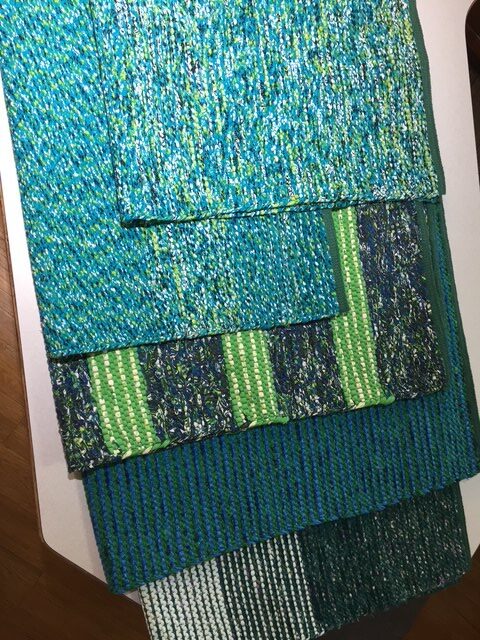
Learn the basics of three shuttle weaving to blend colors, get fabulous edges, and make a table runner. You’ll learn to make ombre progressions, stripes, and color sequences that pop! Then use this technique to make amazing rugs, runners, scarves, and more!
Equipment Needed: Bring a rigid heddle or any 2 or more shaft loom to class. Prior to class you’ll warp your loom for your chosen width with rug warp, and bring at least three coordinating wefts of 1″ or 1 1/2″ cottons or bulky yarns. You’ll need enough weft to make 100 picks of your chosen warp width. So if you made a 12″ wide warp at 4, 5 or 6 epi. you’d need a total of 1200 inches of strips, which is a total of 33.3 yards of weft strips. That would be divided into three colors, 11 yards each, or use 5 colors of 7 yards each. A single yard of 44″ wide cotton, cut into 1″ strips is 1440 inches ( 38 yards) of weft. Cut into 1 1/2″ strips, it would be 960 inches( about 26 yards) of weft. You can sew each color of weft strips together, or join them as you weave, which does make the weaving slower. This is a great way to use up lots of small leftover wefts, too. Material Fee: No cost for the class, the only experience needed is ability to warp your loom. You will need to bring extra rug warp for headers, three shuttles, and scissors. I can bring a pre-warped loom if needed.
THIS CLASS IS FULL
Flax Spinning with Bruce Engebretson
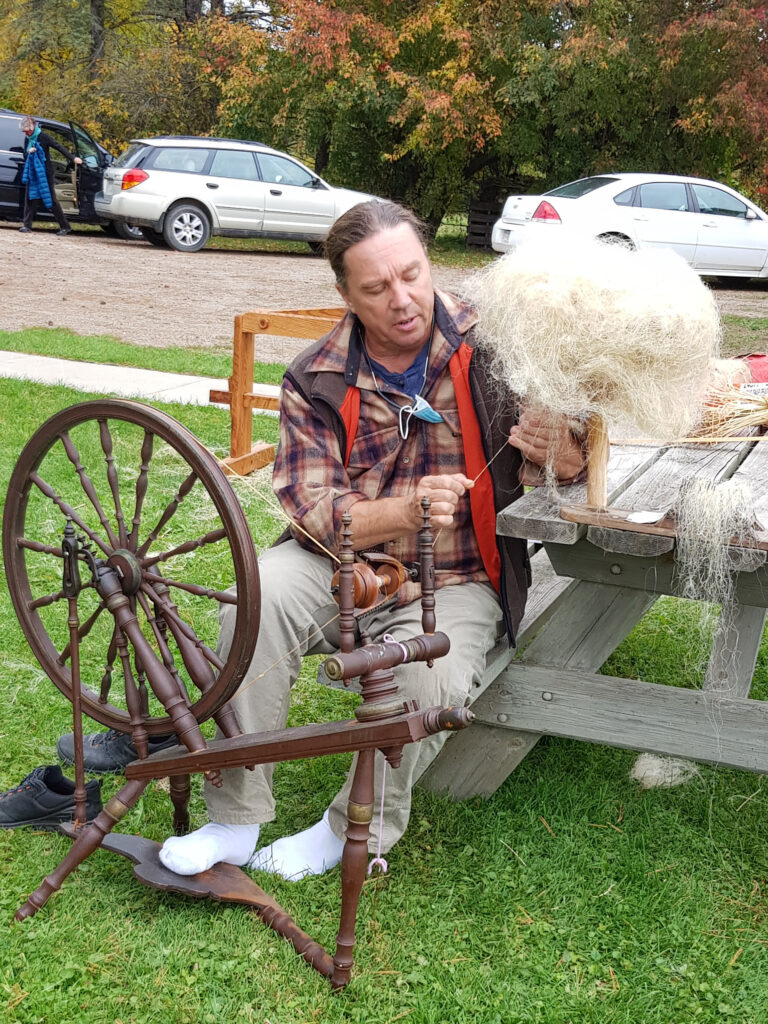
Along with a general history of linen in Nordic countries, students will learn about line, tow and sliver in general. Watch and take part in dressing several styles of distaff. Students will have an opportunity to try spinning tow from a distaff (maybe in a taking turns arrangement), and spinning line from their own spindle or spinning wheel and distaff.
Equipment needed: A spinning wheel and small vessel to hold water, ideally a soup can that can be held to or hung from the wheel with a string. If they have distaffs, they should bring them. Also, ” a belt or band that can go around the torso, at about the level of the navel, to hold a staff distaff if you don’t have one on the wheel”. The instructor will have staff distaffs they can use if they have no distaff, and they will be offered for sale along with tow distaffs. 20 dollars each. Materials fee: $25 will be for the flax.
Knit a Chunky Blanket with Diana Charboneau (Part 1) THIS IS A 2 PERIOD CLASS
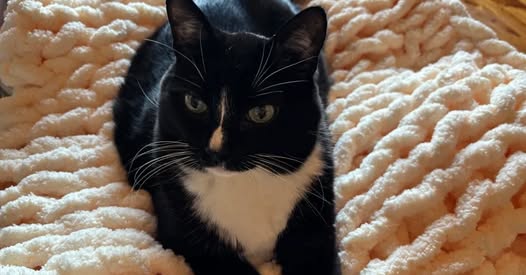
Knit a chunky blanket without knitting needles! Your pets will love you forever and you may not be able to get them to stop hogging your new, wonderful creation! This class will guide you through creating a blanket using finger looping. Equipment Needed: Please bring a pair of scissors and 6 skeins of chunky blanket yarn. The yarn can be 2 different colors if you would like. The instructor will touch base with you before the class on which brands she recommends. You may not be able to finish your blanket in the class time but the instructor will show you how to finish the blanket off so you can finish it at home if needed. Welcome to your new addiction of knitting a blanket in a single afternoon!
Wool Sculpted Pumpkins with Barb Lyndgaard
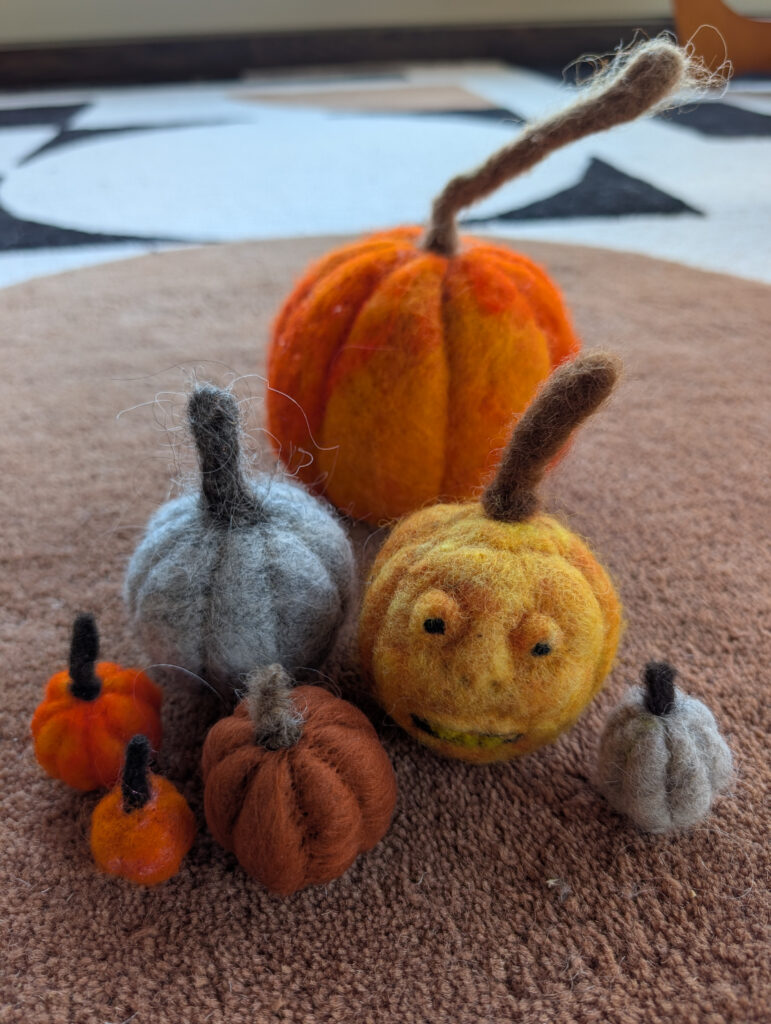
October is the perfect time to harvest pumpkins! Why not felt a few? We will do a combination of wet felting and needle felting to sculpt the perfect pumpkin. No experience necessary.
Equipment Needed: It would be good to bring a towel for wet felting drips.
Material Fee: $10 or you are welcome to bring your own fiber to felt.
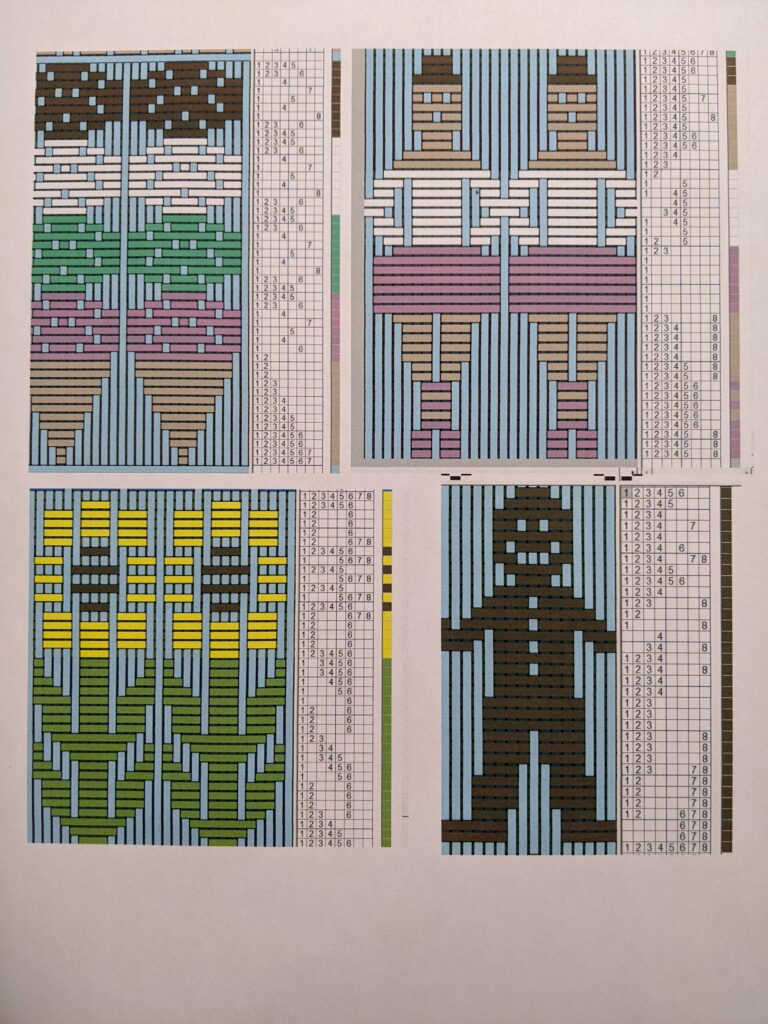
Designing Figures for 8 Shaft Looms with Helen Stoerzinger
Cards, towels, clothing, table runners, wall hangings, etc. can be entirely covered, or only border-decorated with the original figures you design. Students will see two dozen examples of the teacher’s original designs, plus a dozen designs published in 2001 Handwoven. Then design your own! Design on graph paper with pencils (& eraser) or bring your laptop computer that has either spreadsheets or weaving software. Most figures will be tall, narrow, and have left-right symmetry, like a carrot, a tulip, a lighthouse, a snowman and an ice cream cone.
Material fee: $1 for handout
Student should bring pencils and eraser, colored pencils and ink eraser that works with them. Optional laptop with spreadsheet or weaving software. Pictures of holiday decorations, seed catalogs, wild flower books and other interesting pictures or objects for inspiration. Optional images of woven figures in other techniques, such as krokbrag, bound weave or others.
Ways to Spin Blended Tops (Without Ending Up with Mud) with Beth Friedman
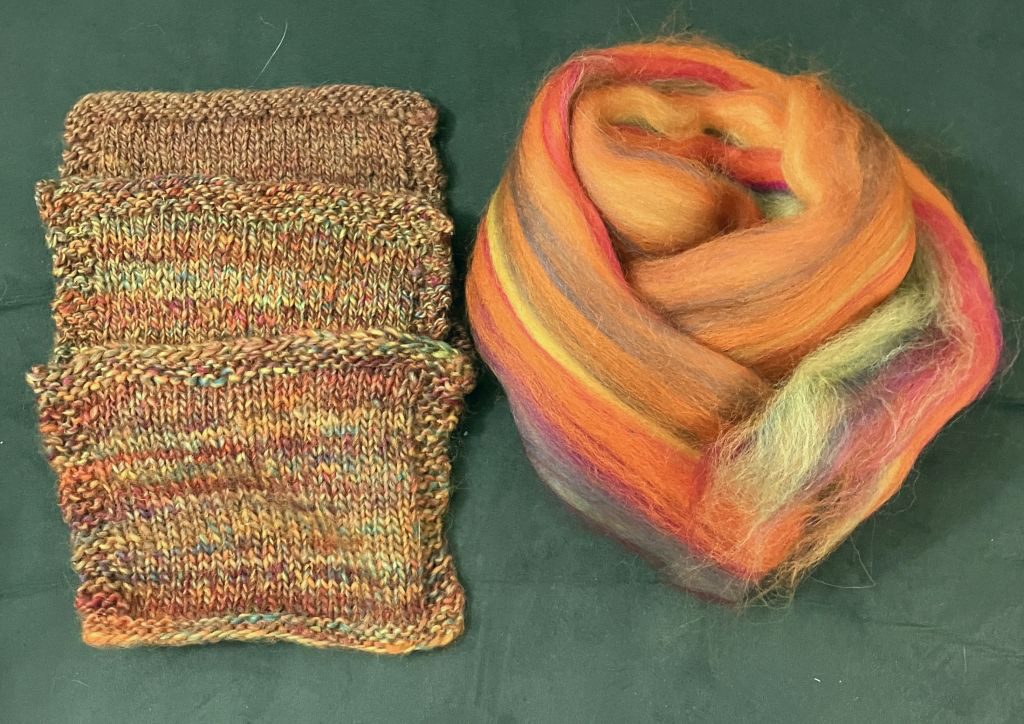
Have you ever been tempted by the lovely colors of some blended tops, but when you took them home and spun them, the results were disappointing? Blended tops are increasingly popular for their reasonable cost and their variety, but they present challenges as well. In this class, students will learn a number of different ways to spin this preparation. Students must be able to spin a continuous single yarn.
Equipment needed: Spinning wheel, strongly recommend three bobbins and a lazy kate
Materials fee: $15
THIS CLASS IS FULL
Inkle Weaving: Basics and Beyond with Peggy Baldwin
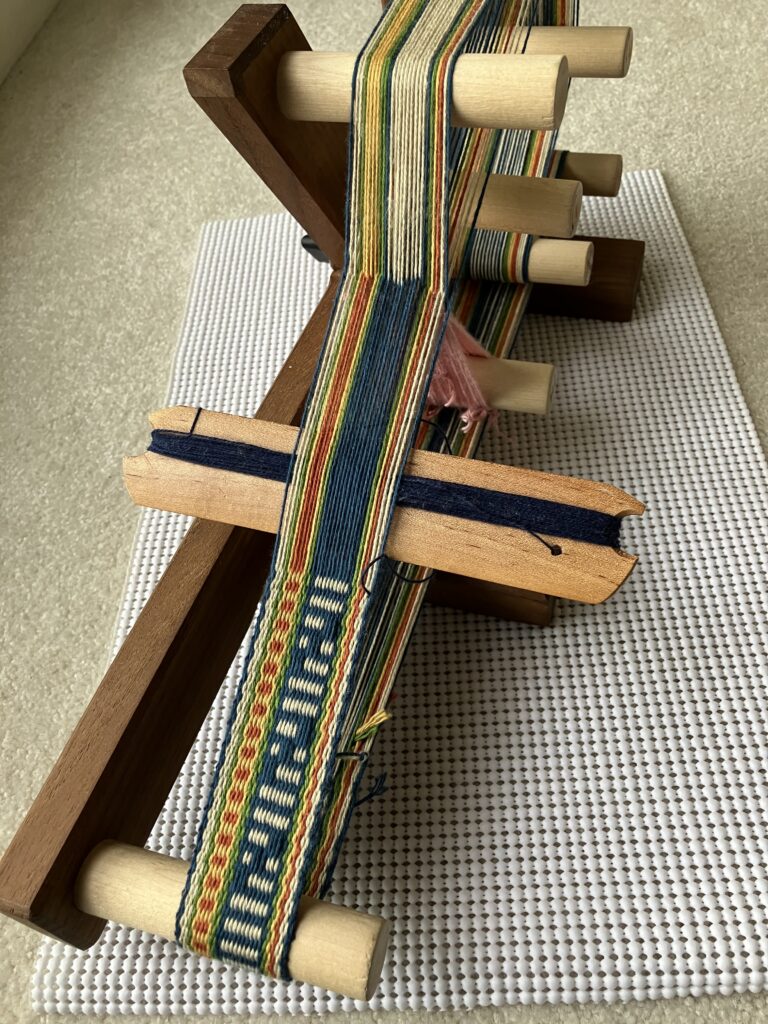
This class is appropriate for anyone wanting to learn more about weaving on an Inkle loom and for anyone just wanting to get together with other Inkle enthusiasts. The class will cover the importance of color choice, basic threading technique, Inkle pick-up with unheddled warps, and functional uses for woven inkle bands. We will look at ways to design patterns for Inkle weaving. I will bring an array of bands and their uses. Equipment Needed: A working Inkle loom with a belt shuttle and appropriate smooth cotton material. I recommend 5/2 or 3/2 perle cotton, cotton carpet warp or 8/4 cotton or cottolin. The colors chosen should include a dark value, light value and 2 or 3 bright accents. Also, a scissors and a rubbery mat (preferable) or C-clamp to hold the Inkle in place while working. Materials fee: $5
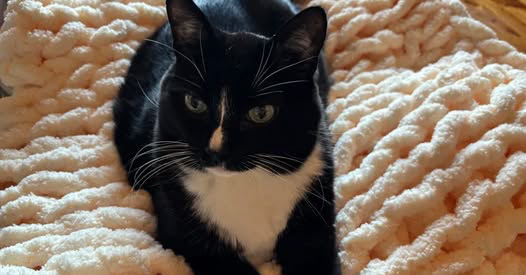
Knit a Chunky Blanket with Diana Charboneau (Part 2) THIS IS A 2 PERIOD CLASS
Knit a chunky blanket without knitting needles! Your pets will love you forever and you may not be able to get them to stop hogging your new, wonderful creation! This class will guide you through creating a blanket using finger looping.
Equipment Needed: Please bring a pair of scissors and 6 skeins of chunky blanket yarn. The yarn can be 2 different colors if you would like. The instructor will touch base with you before the class on which brands she recommends. You may not be able to finish your blanket in the class time but the instructor will show you how to finish the blanket off so you can finish it at home if needed. Welcome to your new addiction of knitting a blanket in a single afternoon!
Natural Dye Class with Alethea Kenney (Part 1) THIS IS A 2 PERIOD CLASS
Come learn by experience about natural dyes and the range of colors you can get! Learn a bit about mordants, modifiers and the differences in colors when dyeing plant fibers vs animal fibers. This is a laid back class focusing on having fun learning by experience.
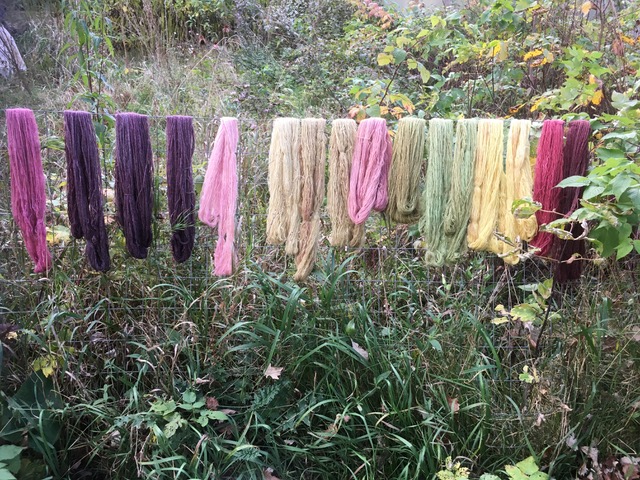
Attendees can bring items they would like to try dyeing in various dyepots. Items should be clean and ready to take dye but don’t need to be pre-mordanted unless you’d like to see what changes that can make in color. Some examples of items for dyeing include untreated wood buttons/beads, small amount of basketry material, yarns of many types (clean), shells, cotton, wool, silk, fabrics of various types or similar thing. If time and situation allow, we will try wild crafting materials to use as dyes. Handout includes basic information about mordants, modifiers and natural dyes history and processes. Equipment needed: Items to add to dye pots, protective clothing you don’t mind getting dirty (aprons, old clothes, etc), kitchen or nitrile gloves to protect your hands, an open mind and be prepared to have some vibrant fun.
Materials Cost: No cost to dye your reasonably small items
THIS CLASS IS FULL
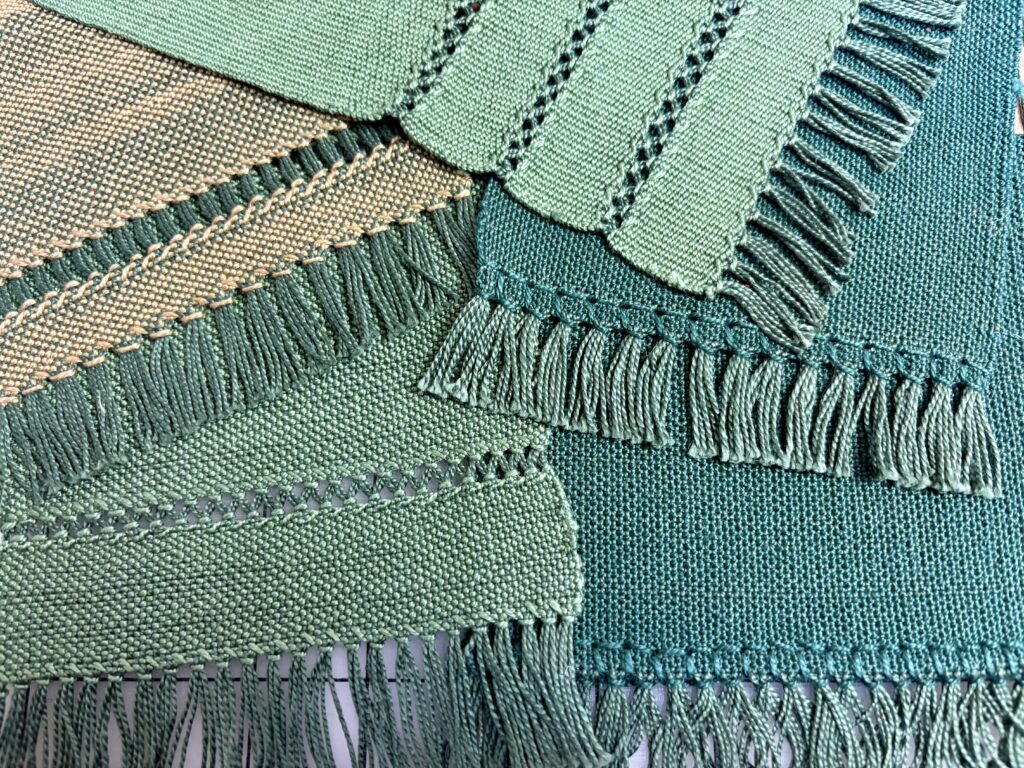
Finishing Touches for Your Toolbox with Loretta Stacy
Learn 3 types of hemstitching so when you cut your weaving from the loom, your item is securely finished. You will also learn how to incorporate hemstitching as a design feature.
Equipment needed: Students will bring to class a warped rigid heddle or shaft loom, 2 loaded bobbins and a shuttle, scissors. Students will be contacted prior to class with instructions. All levels of experience are welcome. Material Fee: $1 for handout
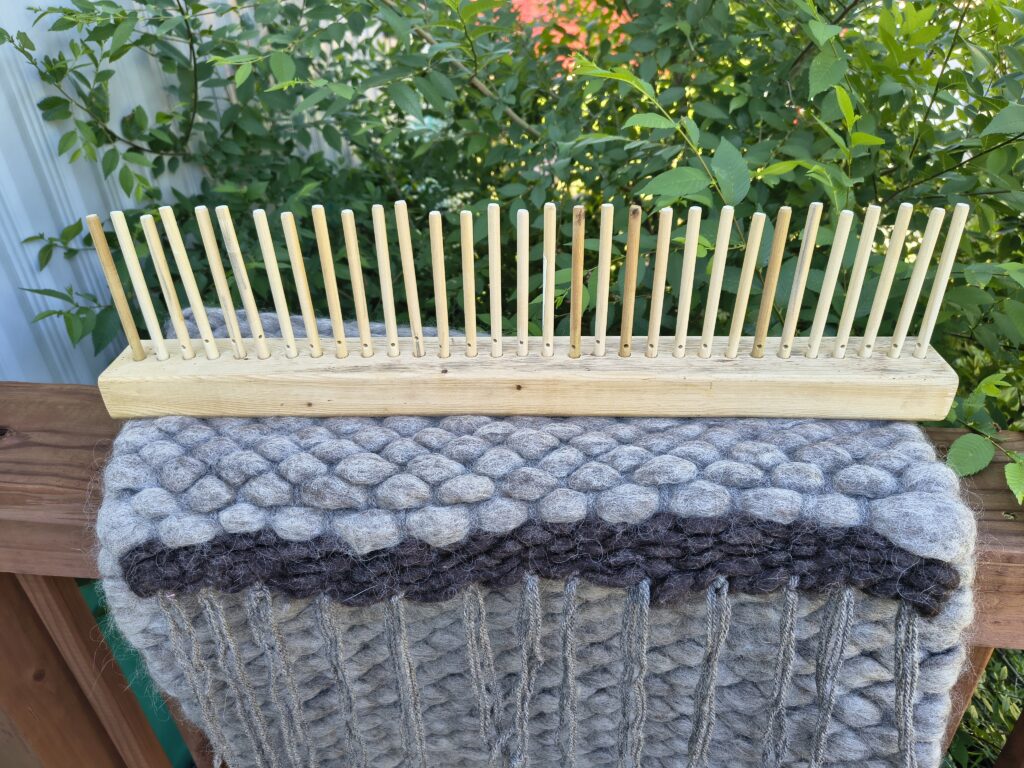
Peg Loom Weaving with Terri Goenner
Peg loom weaving is a bit different from traditional loom weaving, but it is simple and quick. Something you could easily teach your child, or grandchild. The project should be able to be completed within the allotted class time. You will learn how to make a square or round piece, on the same loom. Project size will be suitable for a chair pad, or small pet mat. No experience necessary. Weave a Chair pad/Small Pet Mat
Looms with warp provided for class use. Available for purchase.
Materials available for purchase approx. $15-$35. Or bring your own weft. Rag strips, chunky yarn, roving, or thick core spun yarn, will work.
SATURDAY AFTERNOON
Natural Dye Class with Alethea Kenney (Part 2) THIS IS A 2 PERIOD CLASS
Come learn by experience about natural dyes and the range of colors you can get! Learn a bit about mordants, modifiers and the differences in colors when dyeing plant fibers vs animal fibers. This is a laid back class focusing on having fun learning by experience. Attendees can bring items they would like to try dyeing in various dyepots. Items should be clean and ready to take dye but don’t need to be pre-mordanted unless you’d like to see what changes that can make in color. Some examples of items for dyeing include untreated wood buttons/beads, small amount of basketry material, yarns of many types (clean), shells, cotton, wool, silk, fabrics of various types or similar thing. If time and situation allow, we will try wild crafting materials to use as dyes. Handout includes basic information about mordants, modifiers and natural dyes history and processes. Equipment needed: Items to add to dye pots, protective clothing you don’t mind getting dirty (aprons, old clothes, etc), kitchen or nitrile gloves to protect your hands, an open mind and be prepared to have some vibrant fun.
Materials Cost: No cost to dye your reasonably small items
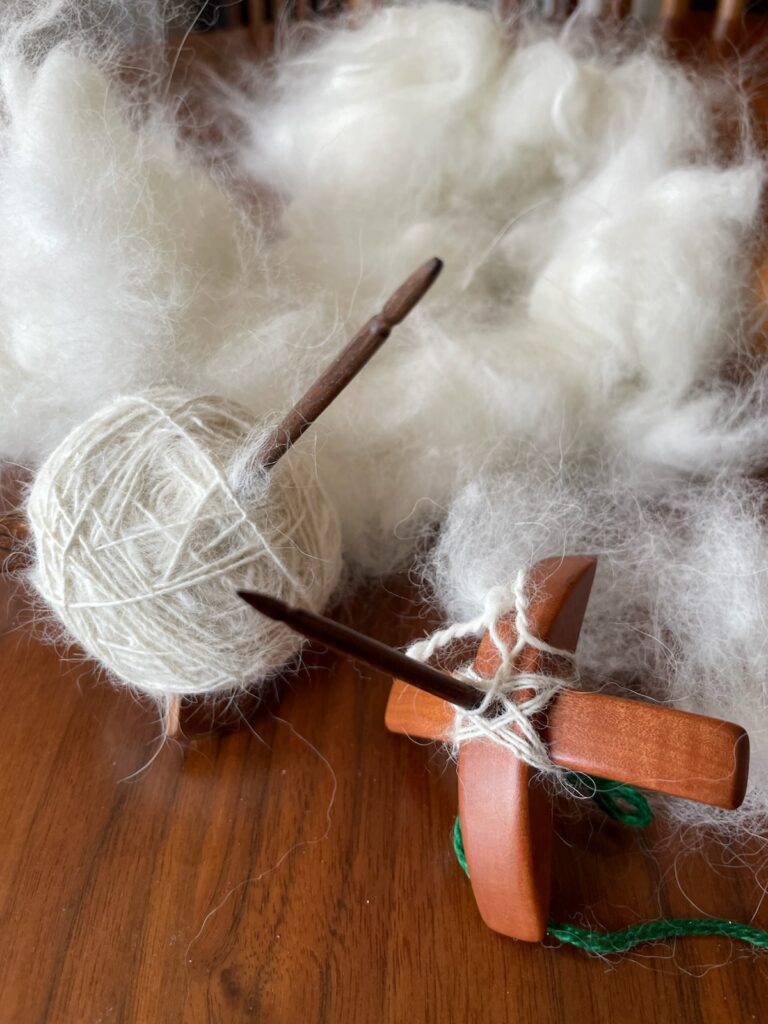
A Dog and a Caterpillar walk into a Spin class … with Neal Goman
Class Description: They’re not wool. Spin two different luxurious fibers, Samoyed dog fur from a cloud and silk as a hanky or roving.
Equipment needed to participate: working spinning wheel and/or drop spindle. typical sampling tools (spare bobbins, plastic bags, note taking equipment, niddy noddy, etc.), hand cards (optional should you want to blend the two fibers)
Level of experience for students to enroll in class: Sufficient spinning experience Materials fee to be paid by the student to the instructor: $20
THIS CLASS IS FULL
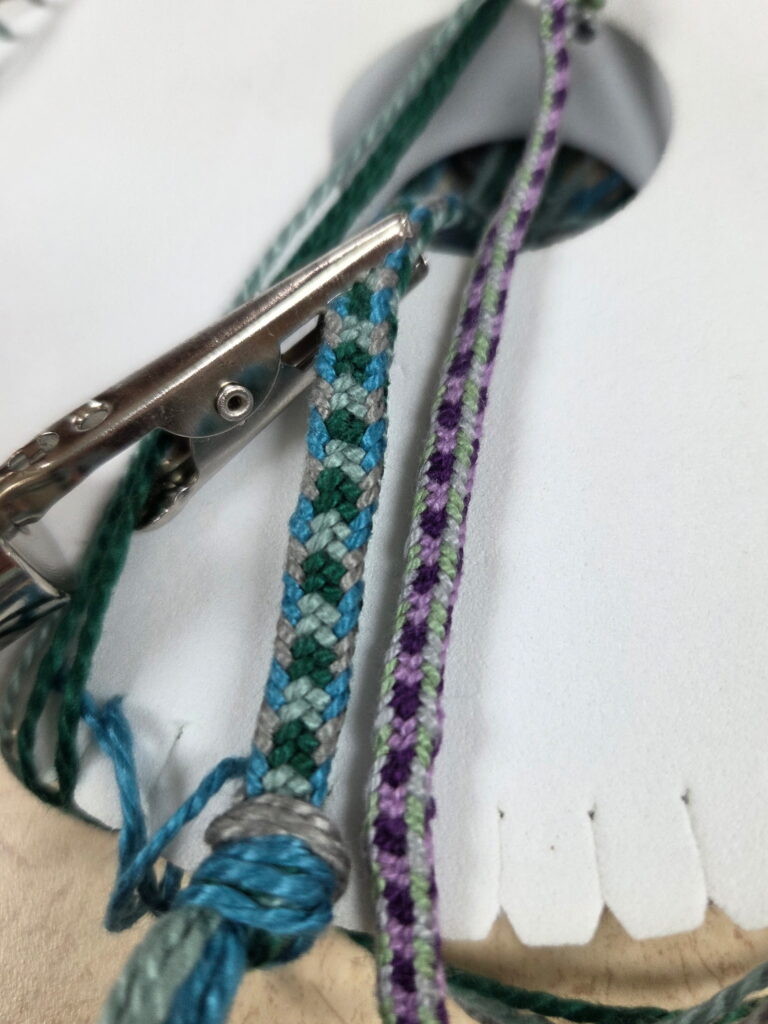
Kumihimo with Nicole Crist
Kumihimo, meaning “gathered threads”, is a traditional Japanese art form of complex – 16 strand braiding. In the past, Kumihimo braids were made on a marudi and used for many purposes, including decoration over an obi. Kumihimo braids are now being used for hoodie strings, shoelaces, friendship bracelets, key chains/fobs and more.
In this modern version, you will learn using a foam disc and bobbins. We will make a 16-strand braid to make a key fob.
Materials Fee: $30 – Includes: Kumihimo disc, 16 bobbins, weight, key fob hardware and yarn.
Optional: An ergonomic disc holder can be purchased for $6.00 Level of Experience: Beginner
Weavers’ Color Conundrums with Cathie Mayer
Are the colors in your weaving misbehaving? When you mix, combine or blend colors it just doesn’t turn out as you’d envisioned, despite your lovely yarn wrap?
There are several key principles that affect the color aspects of your finished cloth. Join us for a discussion of these principles, with examples, hands on exercises, and looking at particularly problematic drafts. (Psst – this is NOT a class on color theory or use of the color wheel).
Equipment Needed: Students bring a set of colored pencils.
Material Fee: $5 for handout
THIS CLASS IS FULL
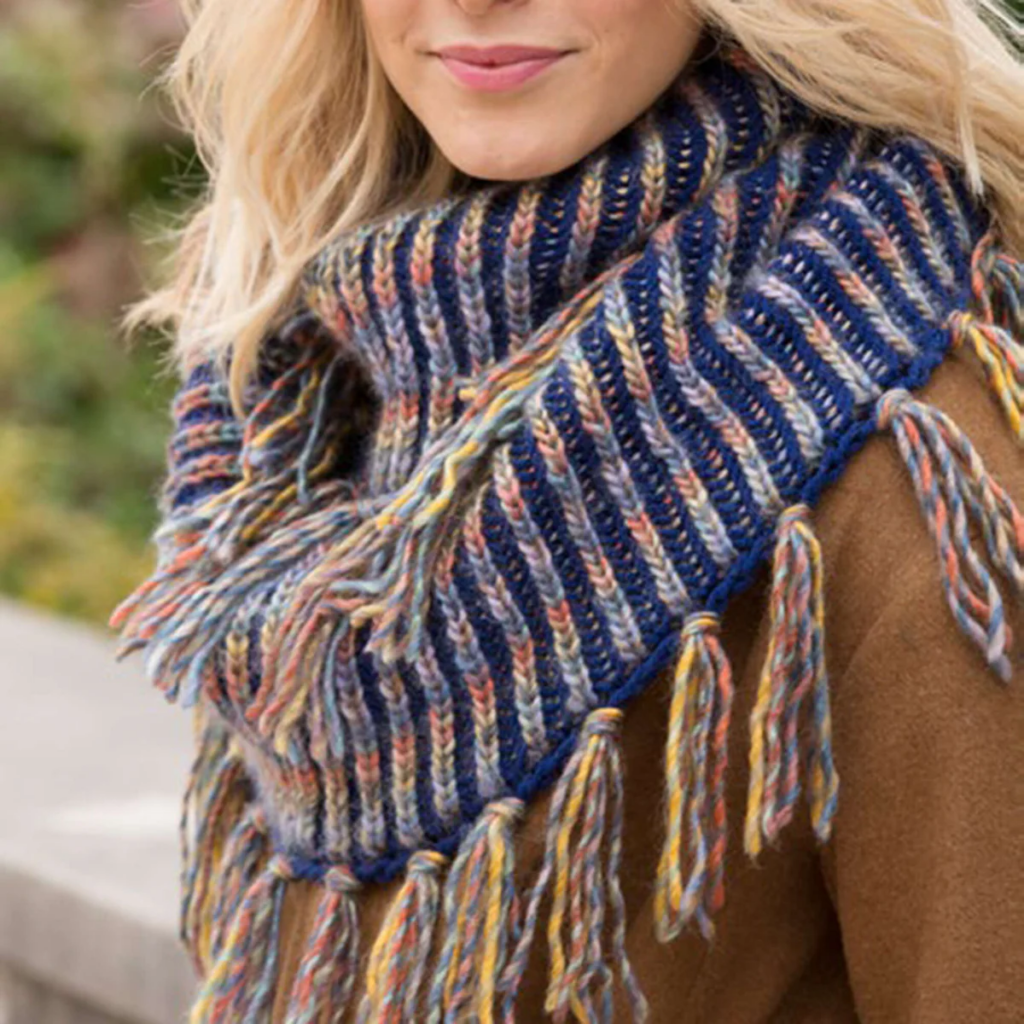
Brioche for Beginners with Heather Schmidtke
A class for learning the brioche stitch which produces a thick, reversible fabric. This method involves using slipped stitches and yarn overs, resulting in a lofty, ribbed texture that is both warm and squishy. You will have the option of creating a hat or cowl with the materials provided. There will be a variety of colors to choose from for the class.
Students must know basic knitting stitches and have a working ability to knit
Equipment needed to participate: knitting needles – for the hat size 4 (either 16″ circular needles or 4 double point) for the cowl size 9 circular 24″ needles Materials fee to be paid by the student to the instructor: $25 for yarn
THIS CLASS IS FULL
Knit Like A Viking with Nancy Preckshot
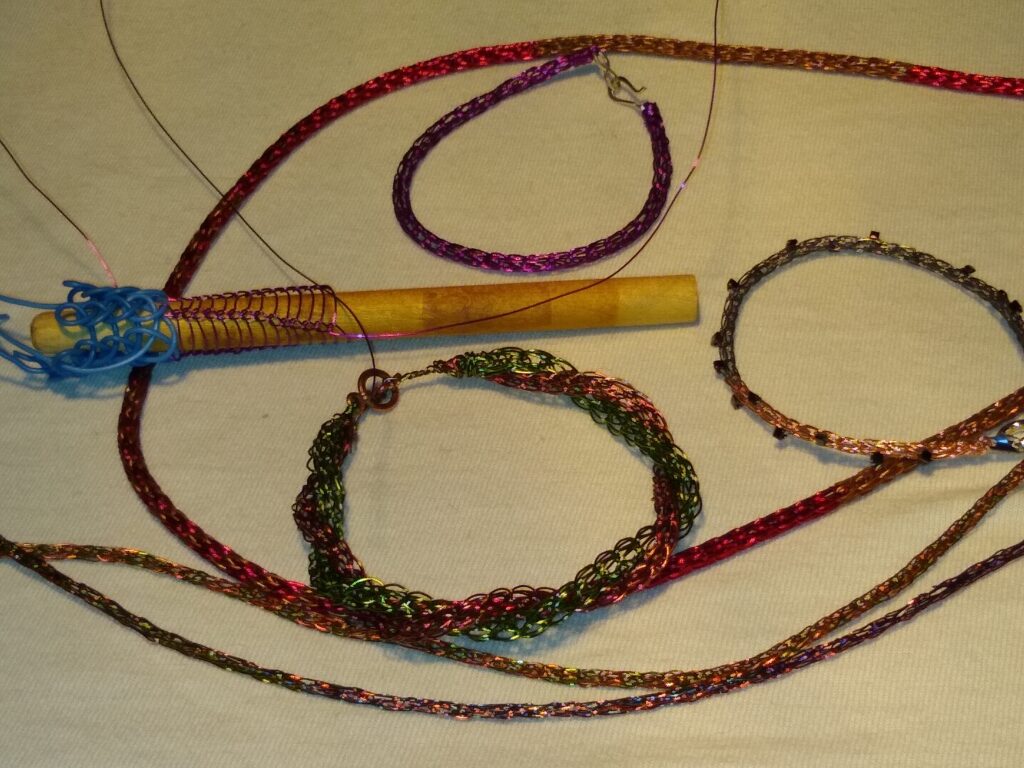
Those Vikings were so clever! In this class, we’ll take a break from marauding and knit instead. Viking Knitting (a.k.a. Trichinopoly Chain) is a simple technique that looks complicated. It resembles twisted stitch I-cord but the process is, confusingly, more like sewing and is done with a minimum of simple tools. We’ll explore the basics and the result will be a lovely bracelet.
Equipment Needed: Tools will be provided, too, but if the student would like to bring their own small needle nose pliers and wire cutters that would be helpful. Level of Experience: Beginner Material fee: All the supplies and handouts will be provided for a $5 materials fee.
Weaving Circles with Helen Stoerzinger
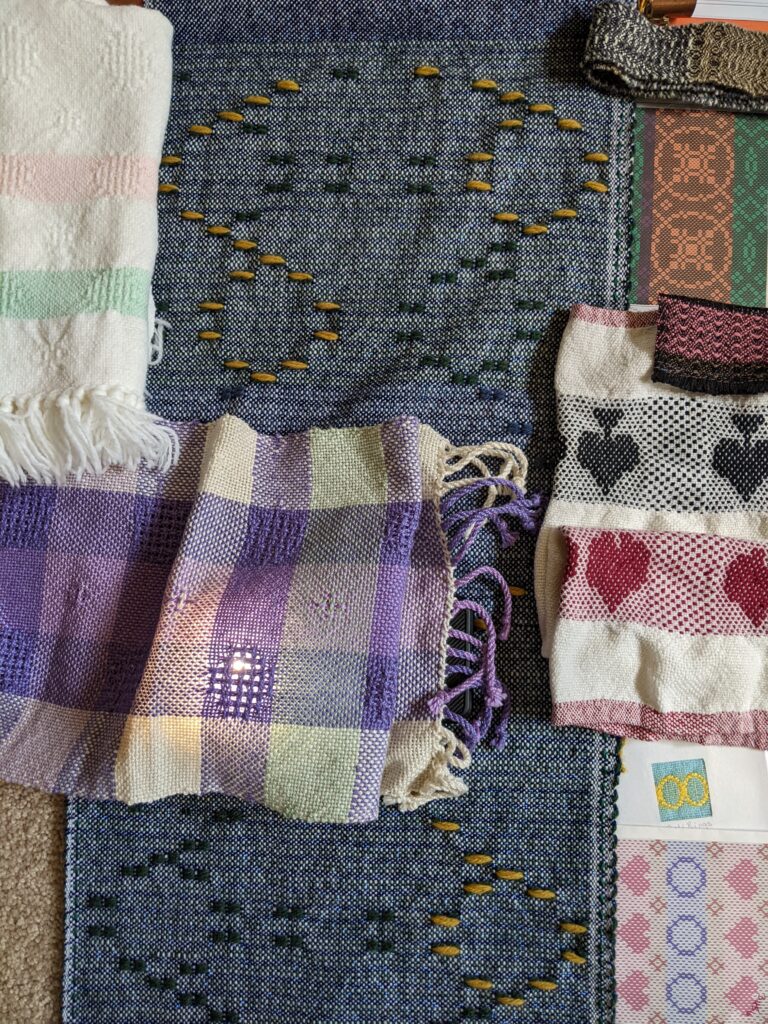
Weaving Circles, your Card Party, plus Shamrocks. Learn on paper or on your laptop how to weave circles and other non-rectangular shapes on a loom. The warp and weft always want to make right angles! How can I weave circles, sine waves, hearts and such??? You will design circles, diamonds, clubs, spades, shamrocks and sine waves, using the grids of warp and weft. Some of the weaving structures will be summer and winter, huck lace, Atwater-Bronson lace, and twill. Most of my woven examples required 6-8 shafts on the loom, but no more than 8 shafts.
Helen will have examples to see in class for your inspiration.
Equipment needed: Pencils, erasers, colored pencils. Optional: Laptop or tablet that has spreadsheet or weaving software.
Material fee: $1 for graph paper handout